
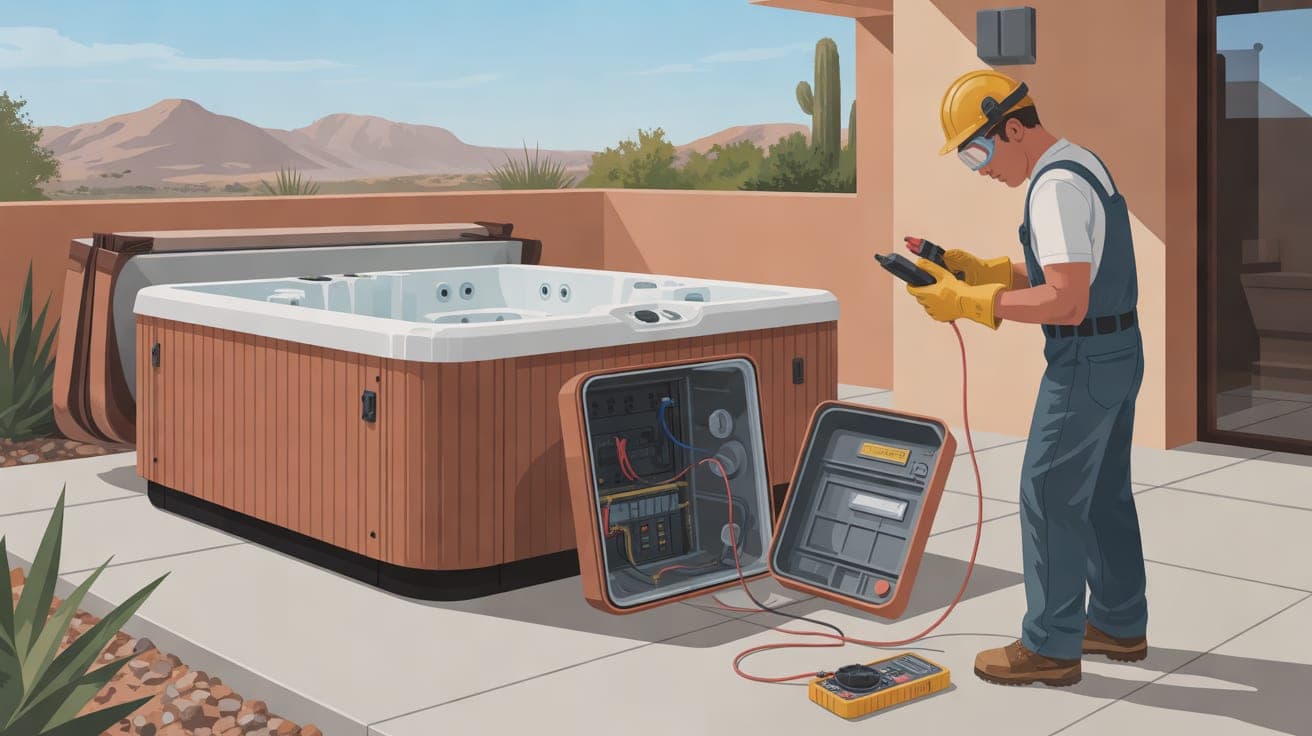
Good Life Hauling & Junk Removal prioritizes hot tub removal safety by executing strict 240-volt electrical isolation, draining residual water, and employing controlled acrylic shell cut-downs or heavy-duty rigging. Safely extracting a 500 to 1,000-pound spa prevents severe electrical shocks, structural deck collapse, and personal injury across Mesa and East Valley properties.
Table of contents
- What essential hot tub removal safety steps must you take before disconnection?
- How do you perform safe 240V electrical isolation and plumbing drainage?
- What is the safest technique for cutting down an acrylic hot tub shell?
- How do you protect decks and pathways during heavy spa hauling?
- How does DIY spa disposal compare to professional hot tub removal safety?
- Frequently asked questions
What essential hot tub removal safety steps must you take before disconnection?
Before touching a single tool, you must systematically verify that power is fully disconnected at the main breaker, drain all standing water, and map out an unobstructed clearance path to prevent structural damage and physical injury. A dry 6-person spa typically weighs between 600 and 900 pounds. If residual water remains trapped inside the jet lines and lower footwell, that weight spikes rapidly because water adds 8.34 pounds per gallon. Moving a spa with just 30 gallons of trapped water adds over 250 pounds of unpredictable liquid ballast, shifting the center of gravity while you lift.
Site preparation requires a clear evacuation corridor. You need to measure every doorway, gate opening, roof overhang, and corner turn between the tub's current pad and the loading vehicle. Remove fence panels or gate stops beforehand if clearance is under 36 inches. Inspect the terrain along your haul route: lawn areas, gravel beds, and soft desert soil will sink under cart wheels, requiring you to lay down 3/4-inch plywood sheets as temporary runner tracks to maintain wheel roll and prevent tipping.
How do you perform safe 240V electrical isolation and plumbing drainage?
Complete electrical isolation requires turning off the dedicated double-pole breaker at the main service panel, disconnecting the wires inside the exterior GFCI shutoff box, and verifying zero voltage with a calibrated multimeter before touching any components.
Dedicated Double-Pole Disconnect Box: A weatherproof exterior electrical box containing a GFCI breaker or manual pull-out switch, situated at least 5 feet from the tub's edge within line of sight, designed to completely isolate the 240-volt hardwired electrical feed from the home's primary panel.
Never rely solely on the toggle switch on the spa control board or the local outdoor disconnect box. Lock out or tag the main electrical panel inside your home so no one accidentally flips the switch back on while work is in progress. Open the disconnect box panel, switch off the breaker, and use a non-contact voltage tester followed by a multimeter across the hot-to-hot and hot-to-neutral terminals. Only when the meter reads 0.0 volts AC should you disconnect the hardwired flexible conduit (whip) from the spa pack.
Once electrical systems are completely safe, focus on complete plumbing drainage:
- Gravity Drain Valve: Attach a standard garden hose to the lower footwell drain valve. Gravity draining is slow and often leaves 10 to 20 gallons of water in bottom recesses.
- Submersible Sump Pump: Drop a small bottom-suction sump pump into the footwell to clear bulk water in minutes.
- Air Channel Purge: Wet/dry shop vacuums applied directly to jet nozzles suck out water trapped inside interior manifold loops and heating chambers.
What is the safest technique for cutting down an acrylic hot tub shell?
Cutting down a hot tub shell requires a heavy-duty reciprocating saw equipped with 6 to 9-inch bi-metal demolition blades, paired with full respiratory protection to shield against airborne fiberglass and polyurethane dust.
When yard space or narrow gate clearances prevent rolling an intact tub out on a dolly, cutting the spa into manageable sections becomes necessary. A standard acrylic spa consists of three distinct layers:
- An outer decorative cabinet (wood or synthetic resin)
- A high-density polyurethane spray-foam insulation layer
- A fiberglass-reinforced acrylic shell
Follow these structural cut-down mechanics:
- Strip the Exterior Cabinet: Remove the outer skirt panels and corner caps using a drill or pry bar to expose the internal framing and foam layer.
- Equip Proper PPE: Put on an N95 or P100 respirator, sealed safety goggles, heavy work gloves, and long sleeves. Cutting fiberglass shell matrix generates fine glass fibers and chemical foam particles that cause severe skin, eye, and lung irritation.
- Select Blades: Use 10 to 14 TPI (teeth per inch) bi-metal blades. High-TPI wood blades bind in the melted acrylic, while coarse aggressive blades shatter the shell into dangerous flying shards.
- Execute Sectioning Cuts: Divide the tub into quarter sections. Make continuous vertical cuts through the acrylic and foam, avoiding central pump areas if electrical components have not been fully gutted. Vacuum fine particulate continuously to keep work surfaces visible and clear.
How do you protect decks and pathways during heavy spa hauling?
Protecting decks and property during spa transport requires distributing the hot tub's weight across structural joists using heavy-duty plywood sheets and rolling the frame on a specialized spa dolly or heavy-load furniture cart.
Residential elevated decks are built to withstand distributed live loads, not massive, concentrated point loads created when a 800-pound spa is tipped onto its narrow side edge. Before tipping an intact spa on a deck, place 3/4-inch plywood under the tipping pivot line to distribute point pressure across multiple floor joists. Check deck framing underneath for rotting posts, loose ledger boards, or rusted joist hangers before rolling heavy equipment across it.
When maneuvering down deck stairs or uneven slopes, use a low-profile spa dolly with pneumatic or solid rubber tires. Fasten heavy ratchet straps around both the spa shell and dolly frame so the unit cannot shift or spill sideways during transit. Keep at least two team members on the downhill side acting as spotters, using heavy-duty webbing straps to control momentum down ramps.
How does DIY spa disposal compare to professional hot tub removal safety?
Choosing between DIY spa disposal and professional removal comes down to balancing severe injury risks and tool costs against speed, safety, and physical exertion.
| Assessment Criteria | DIY Cut-Down Method | DIY Whole-Spa Rigging | Professional Junk Removal |
|---|---|---|---|
| Physical Strain & Risk | High (sharp acrylic edge hazards, fine fiberglass inhalation) | Extreme (risk of crushing injuries, spinal strain) | Zero (handled completely by trained crew) |
| Tool Requirements | Reciprocating saw, demolition blades, N95/P100, shop vac | Spa dolly, heavy-duty straps, ramps, 3-4 helpers | Commercial rigging, industrial dollies, haul truck |
| Time Investment | 4 to 8 hours | 3 to 6 hours | 1 to 2 hours |
| Risk of Property Damage | Moderate (dust contamination, wall scratches) | High (deck gouges, fence post damage, dropped spa) | Minimal (insured professionals with drop cloths & ramps) |
| Disposal Logistics | Requires multiple trips to municipal transfer station | Requires flatbed trailer or large box truck | Instant haul-away and responsible material disposal |
Handling an extraction yourself exposes your home to potential structural gouges and subjects your body to dangerous lifting loads. Hiring trained professionals eliminates the physical burden entirely while ensuring every phase of electrical disconnect and disposal meets safety standards.
Ready to reclaim your backyard without risking your back or electrical safety? Good Life Hauling & Junk Removal makes hot tub removal effortless for homeowners across Mesa and the East Valley. Contact tgljunkremoval.com (The Good Life Junk Removal — Mesa, AZ — (602) 905-8227) today to schedule your fast, safe, and stress-free spa haul-away.
Frequently asked questions
What is the 5 foot rule for hot tubs?
The 5-foot rule is an electrical safety standard set by the National Electrical Code (NEC) requiring that all electrical outlets, switches, and disconnect boxes be installed at least 5 feet away from the inside wall of a hot tub. This spatial buffer prevents occupants sitting in or touching spa water from reaching out and contacting high-voltage electrical switches.
Can you move a hot tub in a pickup truck?
You cannot safely transport a standard 6-to-8-person hot tub inside a standard pickup truck bed. Most full-sized hot tubs measure 7 feet by 7 feet or larger, whereas standard truck beds are under 5 feet wide between the wheel wells. Transporting an oversized spa in a pickup creates extreme overhang, high centers of gravity, and severe highway load hazards unless the spa is cut into small pieces or transported on a flatbed trailer.
How can I dispose of my old hot tub?
You can dispose of an old hot tub by hiring a professional junk removal service, hauling it to a local waste transfer station, or breaking it down into raw materials. Once drained and disconnected, metal pumps, copper wiring, and frame components can be taken to scrap metal recyclers, while shell debris and insulation are accepted at municipal landfills and bulk transfer facilities.
Is it sanitary to use an old hot tub?
Using an old, unmaintained hot tub poses significant health and sanitary risks due to stagnant water accumulation and biofilm buildup inside internal plumbing lines. Unchecked plumbing manifolds breed bacteria such as Legionella and Pseudomonas aeruginosa, along with mold and algae. An old tub requires deep line flushes, filter replacements, chemical shocks, and mechanical inspections before it can be used safely.
What tools are needed for hot tub removal safety?
Essential safety tools for hot tub removal include a digital multimeter to confirm zero voltage, a submersible sump pump, a reciprocating saw with bi-metal demolition blades, an N95 or P100 dust respirator, heavy leather work gloves, eye protection, heavy-duty ratchet straps, and a commercial spa dolly.